

Article: The Placement of Flatware
The Placement of Flatware
Whenever Bradley or I set the table, I notice how differently we approach the same task. The plates may land in the same place, but the flatware occasionally takes a different route.
Growing up in Germany, I rarely thought about how a table was set. A fork to the left, a knife to the right—it was simply familiar. The table was where we gathered, ate, and stayed long after the plates were empty. Only after moving to the United States did I begin to notice the different arrangements people make at home: utensils together on a napkin, both on one side, or placed wherever there happens to be room.
It made me wonder how much of my own habit came from childhood, and how much from the years I spent working in hospitality.
During my time at the Hotel Vier Jahreszeiten Kempinski in Munich, setting a table became second nature. Each piece had a purpose, and its position followed the meal. Working from the outside inward, the guest could find what they needed for each course. The same arrangement helped those serving keep track of what had been used and what was still to come.
I still begin with the menu. Will we have soup? Is there a first course? Does the fish need its own flatware? Before placing anything, I think through what we are going to eat.
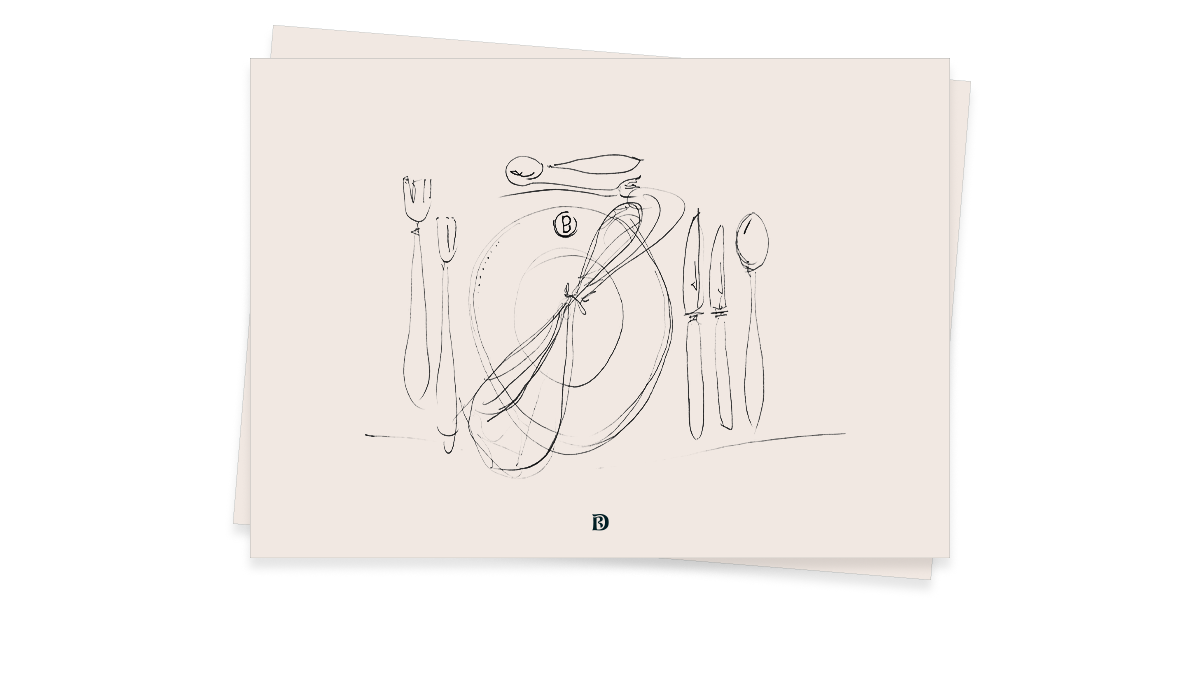
This is how I learned to set a table: the knives line up evenly on the right, their blades facing the plate—a small courtesy to your neighbor. The soup spoon sits beside them, in its place within the sequence. On the left, I place the appetizer fork slightly higher than the main-course fork, creating a small step down toward the plate. These are details my hands remember almost without instruction.
When dessert calls for both a fork and a spoon, they wait above the plate. Before it arrives, they glide down to either side—fork to the left, spoon to the right—ready for the last course to be enjoyed.
At home, most meals need only a fork and a knife. I place them on either side of the plate and, if we need a spoon, add it beside the knife. There is a quiet satisfaction in giving each person exactly what they will use.
Sometimes I catch myself adjusting a knife or moving a fork almost without thinking. Years of hospitality training are apparently difficult to switch off, even at a team lunch.
But what stays with me most is the usefulness of it all. A thoughtfully set table gives a guest a little information before the food arrives. Everything is within reach, ready for the meal you have prepared.
By the time we sit down, I have already imagined the evening once: what we will eat, how it will unfold, and what everyone will need along the way.